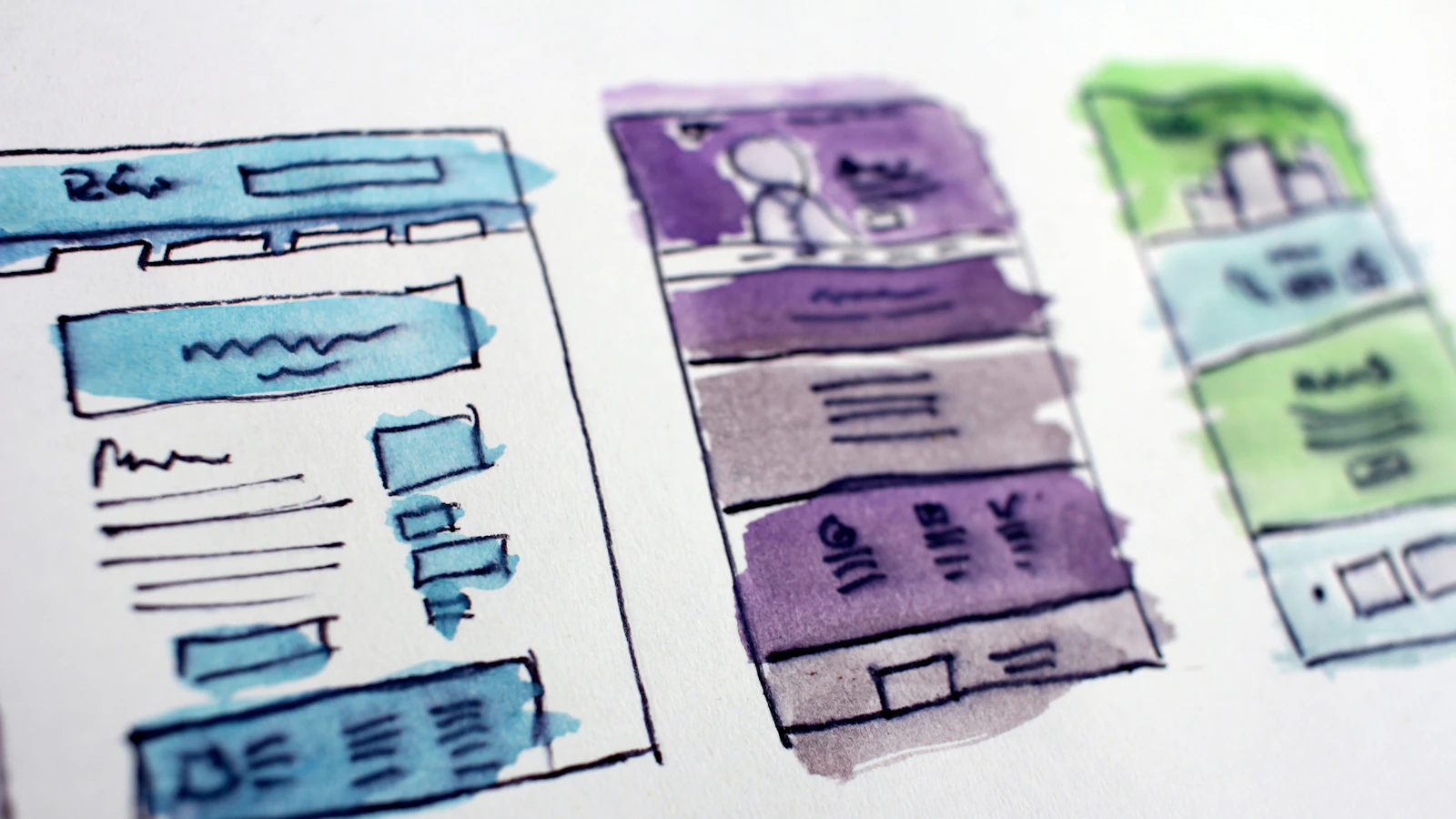
The fastest way to build the wrong system is to ask people what they want and then go away and build it.
People are bad at describing software they have never used. Show them a real screen and they become experts in about four seconds. So when I built a sales CRM, I made a click-through prototype first, a fake version they could poke at, before any real code existed.
What is my take on building business software?
My view: most software projects fail in the conversation, not the code. People cannot describe what they have never used, so the requirements list is always wrong in ways nobody can see until there is a screen. I would always put a cheap prototype in front of the real users before paying for the real thing. If you think that is slower, the cost section below is my argument. It is an opinion, backed by one real project.
What is a click-through prototype?
It is a set of screens that look and behave like the finished thing but are not connected to anything. You can click a button and move to the next screen. You cannot actually save a lead. It takes a fraction of the time to build and it is cheap to throw away.
The Nielsen Norman Group has a good overview of low-fidelity versus high-fidelity prototypes if you want the longer version. The short version is that the earlier you let real users react, the cheaper every mistake is.
Why not just write down what people want?
I did that too. I gathered requirements from sales, finance and the repair centre, because a CRM touches all three. The requirements were good. They were also incomplete, in the way requirements always are, because nobody can list what they have not thought of yet.
The prototype did the work the meeting could not. People looked at a screen and said things like "oh, but I would never do it that way" and, more usefully, "where is the thing I do every morning?".
What did the prototype teach me?
One example is worth more than a list. During the walkthrough I learned that the sales admin does two jobs. She oversees the whole team, and she also works her own deals. In every meeting up to that point, the system had been described as if those were two different people.
That one fact changed the design. She got a Team / My pipeline toggle, so she can look at everyone's deals or only her own with one click. I would not have thought to ask. She would not have thought to mention it. A screen made it obvious.
How do I run a prototype session?
If you are building or buying any business system, steal this method:
- Gather the basics first. Who will use it, what do they do all day, what do they use now? Talk to every group affected, not only the person paying.
- Draw the key screens. Keep it rough. Three to six screens is plenty to start.
- Put it in front of the real users, one at a time if you can. Ask them to do their normal Monday morning task and watch where they get stuck. Do not explain. Watching is the point.
- Write down every surprise. The surprises are the design.
- Change the prototype and show it again. Only start building when the same people nod without surprise.
It feels slower. It is faster, because the expensive part (code) is written once instead of three times.
What happened after the prototype?
I built the real system in phases. It has invite-only logins, three roles, a kanban-style board that shows deals as cards moving across stages, customer profiles, notifications and branded emails. Permissions are enforced in the database, so a consultant only sees their own leads, even if they try to type a page address directly. Supabase explains the idea in its guide to row level security.
It is now in a phased test with a small group before the whole team moves over. A few real leads are coming in consistently. I am not going to put a number on it that I cannot prove, and I am glad the team will have tested it before everyone relies on it.
You can try a demo with fictional data on my work page. The full story is Case 002 in the case files.
What does a prototype cost compared with finding out late?
Very little, and that is the entire argument. A change to a drawn screen takes minutes. The same change to a finished system, with a database underneath it and people already trained on it, takes days and an awkward conversation. Every surprise you catch at the prototype stage is one you do not pay for later. I would rather be wrong on a sketch in week one than wrong in production in month three.
What is the biggest mistake to avoid?
Falling in love with the prototype. Its job is to be wrong early and cheaply. If the people using it keep saying "I would not do it like that", that is the prototype working. Change it. Do not defend it.
If you are about to commission a system for your own team and want a second opinion on the plan, book a call and bring the rough sketch.
Frequently asked questions
Do I need design skills to make a prototype?
No. Paper sketches work. So does a slide deck with clickable links. The goal is learning, not beauty.
How many people should test it?
Five or so from the real user groups will surface most of the big problems. More helps, but the first few reveal the most. The Nielsen Norman Group explains the reasoning in why you only need to test with 5 users. The catch is that you should test with five people from each distinct group, such as sales, finance and the repair centre, not five people from the same desk.
Is a prototype the same as a minimum viable product?
No. A prototype is a mock to learn from and usually gets thrown away. A minimum viable product is a real, if small, working product.
When is a prototype not worth it?
For a tiny change or a system with one user who knows exactly what they want. For anything a team will use daily, it pays for itself.